Kidnapping in Nigeria
Kidnapping is a major problem in Nigeria in the early 21st century.
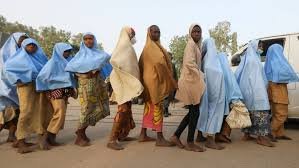
Kidnapping by bandits and insurgents is among the biggest organised or gang crime in Nigeria and is a national security challenge.
Kidnapping is seen as lucrative business and the shortest means to wealth by those involved in this crime. The current wave of abductions across the country makes every person a potential target regardless of social class or economic status unlike political kidnapping which started in the Nigeria’s oil-rich Niger Delta region in the early 2000s and the one by jihadist terror group, Boko Haram in Nigeria’s northeast and northwest that began in 2009 when the conflict there started.
In the Niger Delta, agitators took expatriates working with multinational oil giants hostage to force oil companies operating there to carry out community development projects for the benefit of the host communities or force government into negotiations for more of economic benefits accruing to the federal treasury for the region. Abductions by Islamist terrorist Boko Haram is to further its agenda, recruit fighters, instil fear, gain more international popularity and force the government to negotiate with it for ransom which is one of the means of generating funds for its terrorist operation. Boko Haram have committed several mass kidnappings of students. Their 2014 kidnapping of 276 teenage girls from a secondary school in Chibok, Borno State, was covered extensively by the international media, making millions of people aware of that specific crime and of the insurgency. Boko Haram often demand that victims’ families or the government pay them ransoms, or that the government release prisoners from their group.[12] Boko Haram has brainwashed and forced some of the young people it has kidnapped into joining them and carrying out attacks, including suicide bombings.[12] Boko Haram force many young female victims to marry them.
Kidnapping for ransom on a commercial scale which became rampant in Nigeria in 2011 spread across all the 36 states and the country’s capital, Abuja.
In February 2021, Nigerian journalist Adaobi Tricia Nwaubani wrote for the BBC News, “The Nigerian government seems to have suggested that it can no longer be relied on to keep citizens safe.”
Zamfara State Edit
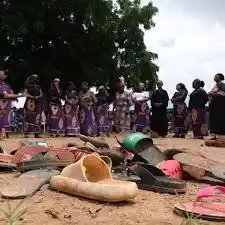
Zamfara, one of the security dark spots in Nigeria is caught between herder-farmers clashes and kidnapping and banditry. In June 2019 a household was attacked by bandits seizing the man alongside his three wives and a 13-year-old son. In August the Director of Budget for the state was kidnapped while his deputy he had been travelling with was killed in the attack.
In 2019, the governor of Zamfara, Bello Matawalle initiated a peace and reconciliation plan to bring the bandits who attack and kidnap villagers back home offering them jobs in place of kidnapping and banditry. In August 2019 over 300 kidnapped victims who were held captive waiting for the payment of ransom on their heads by family members were freed. Days later another batch of 40 kidnap victims were freed.
Makurdi kidnapping Edit
On 24 April 2021, gunmen kidnapped students from the Federal University of Agriculture in Makurdi, in Benue State. According to eye witnesses, three students were kidnapped,[29][30][31] but two students were confirmed kidnapped later. This is Nigeria’s fifth kidnapping from an academic institution in 2021. It came just four days after the Greenfield University kidnapping. On 28 April 2021, the university released a statement confirming the return of the abducted students. According to the university’s spokesperson, the two students came back on 27 April 2021 unhurt.
While the frequency varies from one part of the country to another, PREMIUM TIMES research of cases reported in the Nigerian media from 2015 to May 2021, supported by on-the-ground reporting in some of the hotspots across the country, revealed that no part of Nigeria is insulated from the epidemic.
The study revealed that kidnapping has become perhaps the biggest security threat in the country.
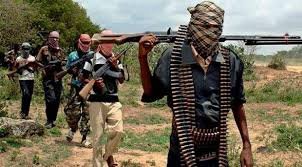
Between January 2015 and May 2020, no fewer than 4,962 persons were kidnapped across the country.
Many cases are not reported to the police or by the media. Security agencies, such as the police and the Department of State Security (DSS) tasked with the primary responsibility of investigating and tackling kidnapping, also do not always record incidents of kidnapping. When they do, they are reluctant to share them with the media.
TEXEM
For several weeks this newspaper sought data from the police in several states and their headquarters in Abuja but our reporters were either told the data do not exist or the requests were not attended to.
Umar Chiroma a Fulani herder who resides in Azurfa town, Lafia L.G.A, the capital city of Nasarawa State, is a two-time victim and survivor of the dreadful gang of armed kidnappers
Umar Chiroma a Fulani herder who resides in Azurfa town, Lafia L.G.A, the capital city of Nasarawa State, is a two-time victim and survivor of the dreadful gang of armed kidnappers
The State Security Service (SSS) too did not respond to similar requests for its data on kidnapping.
The inability of security agencies to keep track is a pointer to the extraordinary volume of the scourge.
Of the 4,962 people reported as kidnapped between 2015 and May 2021, a total of 1,516 or 30.5 per cent of them were abducted between 2015 and 2017.
Kidnapping has also become a huge money-spinner, creating a thriving criminal economy, which attracts more assailants like ants to sugar.
Reported incidents in the media seldom mention how much was paid as ransom to kidnappers. However, a Lagos-based research consulting firm, SB Morgen Intelligence, estimated that between June 2011 and March 2020, Nigerians paid kidnappers an estimated $18.34 million as ransoms (N8.98 billion). According to the report, about 60 per cent of the amount was paid out between January 2016 and March 2020 alone, which is pointer to a spike in recent years.
Awyetu Jimba was on his way to his farmland at a small rural village in Zoni forest, of Toto local government area of Nasarawa state.
Awyetu Jimba was on his way to his farmland at a small rural village in Zoni forest, of Toto local government area of Nasarawa state.
“Kidnapping is becoming more democratised. More people are participating in it in more places. There is a spike in the frequency, the number of kidnapped people and the ransom paid,” said Ikemesit Effiong, Head of Research of SB Morgen Intelligence.
Not only the Fulani
There is a common presumption that rogue Fulani cattle herders are behind every kidnapping in Nigeria. However, our investigation reveals another pattern, involving people from other ethnic extractions.
In the southern part of Taraba State sharing boundaries with Benue State, survivors of abductions and family members who have negotiated ransom payments, accused gangs of Tiv origin of involvement in the cases in the area.
In April 2019, a lawyer, Lawarga Yabura, left his Wukari hometown in the morning for Takum, a journey he never completed.
“News then came that his vehicle was seen parked by the roadside with the doors open,” his younger brother, Ibrahim Iliya, said. “The kidnappers contacted us the following day and demanded N30 million to release my brother and his driver but we later agreed to N2.5 million ransom.”
Ibrahim Iliya, brother of the abducted
Ibrahim Iliya, brother of the abducted
“We raised the money within a week and gave it to them at a location but they refused to release my brother and his driver. They said it was N5 million that they wanted.
“Then, one of them later called to say he had been the one taking care of my brother but he was not given a dime from the N2.5 million we paid. He said we should send N500 thousand to a Zenith Bank account with the name Theodeus Tse, a Tiv name, and that he was going to facilitate the release of our brother and his driver. We sent the money since it involved an account number which we thought was a way to get the kidnappers by the police.”
After sending the money, Mr Iliya said they stopped hearing from any of the kidnappers and they then intensified pressure on the police to act with the account details one of them had sent.
According to records reviewed by PREMIUM TIMES, the police eventually arrested the owner of the Zenith Bank account, Mr Tse, who is based in Abuja. Mr Tse, according to the police records, said his younger brother, who is among the kidnappers, had called him to seek his account number for an “urgent transaction” He did not know it was for a criminal enterprise, he said.
Mr Tse said he forwarded the N500,000 to his younger brother and had since not heard from him again. Mr Tse remains in police custody, while his younger brother remains at large.
The victim, Mr Yabura, has not also been found. His family fears he might have been killed. “We don’t know where he is, whether dead or alive,” Mr Iliya said of his brother.
The Wukari-Takum Road has now become so dangerous that the government has banned the use of motorcycle on it. “The thinking is that motorcycles allow criminals to easily navigate in the bush,” one security official in the state capital, Jalingo, told PREMIUM TIMES.
Aside from being one of the main security concerns in the country, kidnap-for-ransom has become a source of further polarisation of the ethnic nationalities in the country.
Throughout the south of the country and much of the central region, Hausa-Fulani pastoralists who are embroiled in incessant clashes with farmers have become the kidnapping bogeymen.
The need to confront the Fulani cattle herders militiamen who are also accused of destruction of farmland, attacks on villages and other sundry criminal acts, has given birth to a motley of state-backed and non-state militias.
The community head in Toto L.G.A who simply identified himself as Alhaji Bitus
The community head in Toto L.G.A who simply identified himself as Alhaji Bitus
In January 2020, governors of South-west states launched Amotekun, a security outfit, to tackle the rising cases of attacks on farmers and communities blamed on Fulani pastoralists, growing incidents of kidnapping and other security concerns in the region.
Governors of South-eastern states recently stated they will be walking a similar path with the announcement of their agreement to set up the region’s own security outfit named Ebubeagu.
Separatist groups in the South-west and South-east, such as the Nnamdi Kanu-led Indigenous People of Biafra (IPOB) and Sunday Adeyemo’s Yoruba Nation have also tried to use the growing criminality in the regions, which they alleged are carried out by armed Fulani herders, to gain legitimacy.









 Site Title